
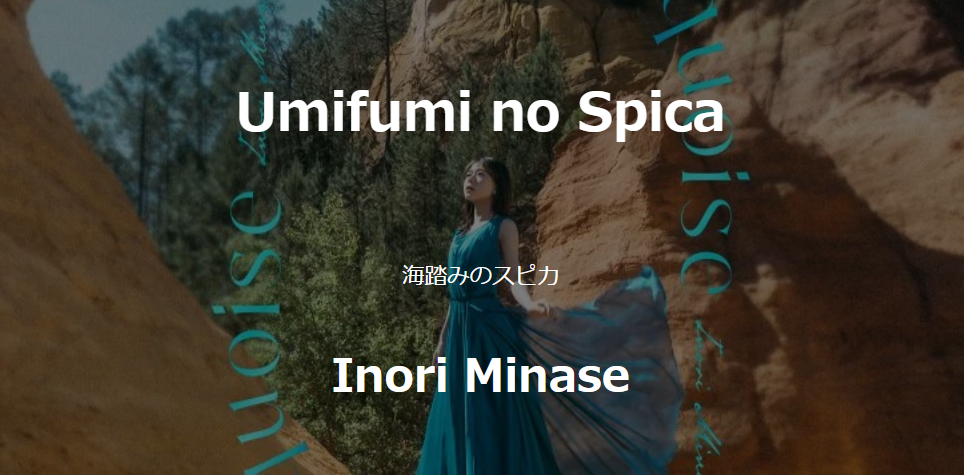
Inori Minase’s “海踏みのスピカ” (Umifumi no Spica) is a song about journey, memory, and the luminous force of companionship. Its lyrics weave images of shadows, compasses, ruins, and rainbows into a narrative of perseverance—a story where the individual becomes inseparable from the shared path forward. What might first seem like a simple ballad of gratitude unfolds into a meditation on time, resilience, and the endless pursuit of light.
Chasing Shadows, Following the Compass
いつの間にか長くなった影を追い越して
Itsu no manika nagaku natta kage o oikoshite
Overtaking the shadow that had grown long before I noticed羅針盤が指す方へとひたすら走ってきた
Rashinban ga sasu hō e to hitasura hashitte kita
I’ve run single-mindedly toward the direction the compass points
The journey begins with shadows lengthening—time passing almost without notice. Against this fading light, the compass becomes a symbol of orientation, of faith in direction despite uncertainty. Already the song suggests a dialectic: the shadow as loneliness and hesitation, the compass as guidance and resolve.
Found Among Ruins and Stardust
ガラクタと星屑で彷徨ってた僕を
Garakuta to hoshikuzu de samayotteta boku o
I was wandering among junk and stardust君が見つけてくれたから
Kimi ga mitsukete kureta kara
Because you found meここまで来れたんだよ
Koko made koreta n da yo
That’s why I was able to come this far
The lyric juxtaposes “junk” (garakuta) and “stardust” (hoshikuzu)—two extremes of the worthless and the sublime. The speaker wanders in this mixture until found by “you.” This discovery is not passive: it is salvific, the transformation of drift into trajectory. The song suggests that companionship grants meaning to fragments of existence, redeeming even debris into part of a constellation.
Language as Infinite Gesture
「おはよう」「おやすみ」
“Ohayō” “Oyasumi”
“Good morning” “Good night”「ありがとう」「ごめんね」
“Arigatō” “Gomen ne”
“Thank you” “I’m sorry”数え切れないくらい
Kazoekirenai kurai
Countless timesそれでもまだまだ
Soredemo madamada
Even so, still not enough
The repetition of everyday greetings and partings becomes a litany of connection. Words, though spoken endlessly, remain insufficient to convey the fullness of feeling. This tension—the infinite need to express versus the finite reach of language—becomes central. The song frames speech not as completion but as ongoing attempt, echoing how music itself speaks where words fall short.
Courage Against Fear
好きを歌ったあの日を今もまだ覚えてる?
Suki o utatta ano hi o ima mo mada oboeteru?
Do you still remember the day I sang of love?あんなにも臆病で錆び付いた僕に
Anna ni mo okubyou de sabitsuita boku ni
To the me who was so timid and rustedそう君が勇気をくれたんだ
Sō kimi ga yūki o kureta n da
You gave me courage
Here, love is not romantic idealization but an act of courage granted by the other. The “rusted self” evokes stagnation, a life worn down by fear. Yet love revitalizes, infusing motion into what was once corroded.
Memory as Archive of Light
雨上がり瓦礫の街にかかる虹
Ameagari gareki no machi ni kakaru niji
A rainbow over a city of rubble after the rain群青に泣いてしまいそうだった空
Gunjo ni naite shimaisō datta sora
A sky so deep-blue it almost made me cryその全部全部を
Sono zenbu zenbu o
All of it, all of itちゃんと心に栞っている
Chanto kokoro ni shiotte iru
I’ve placed as bookmarks in my heart
The lyric catalogs visions of devastation, beauty, and transience. Each is preserved as a “bookmark,” implying that memory itself is a library of lived light. These are not passive recollections but chosen markers, stitched into the symphony of identity.
Endless Journey Toward the Horizon
今は長い旅の途中
Ima wa nagai tabi no tochū
Now we’re in the middle of a long journeyゴールはまだ見えないけれど
Gōru wa mada mienai keredo
The goal is still not in sight十年だって何十年だって
Jūnen datte nanjūnen datte
Even ten years, even decadesずっと
Zutto
Always
The refrain emphasizes time’s vastness. The “long journey” without visible goal could be despair, yet the lyric converts it into affirmation: even across decades, the vow to continue remains. Here the song most clearly embraces Spica—the star—as symbol of guiding light: distant, unreachable, yet always present.
Conclusion: Walking into Light Together
準備はもういいかい?
Junbi wa mō ii kai?
Are you ready?まだ見ぬ地平の向こうへ
Mada minu chihei no mukō e
Toward the unseen horizon輝きを確かめに行くんだ
Kagayaki o tashikame ni iku n da
We’ll go to confirm the radianceどこまでも君と一緒に
Doko made mo kimi to issho ni
Together with you, no matter how far
The closing lines are not a farewell but a call. Readiness, horizon, radiance—these are the images of departure. What began with shadows has become a confident march into light, not in solitude but in companionship.
“Umifumi no Spica” is ultimately a song about trust: trust in memory, in shared words, in the fragile but enduring power of another’s presence. It insists that even when the destination is unseen, the journey itself—walked together—is already a form of arrival.


Comments