
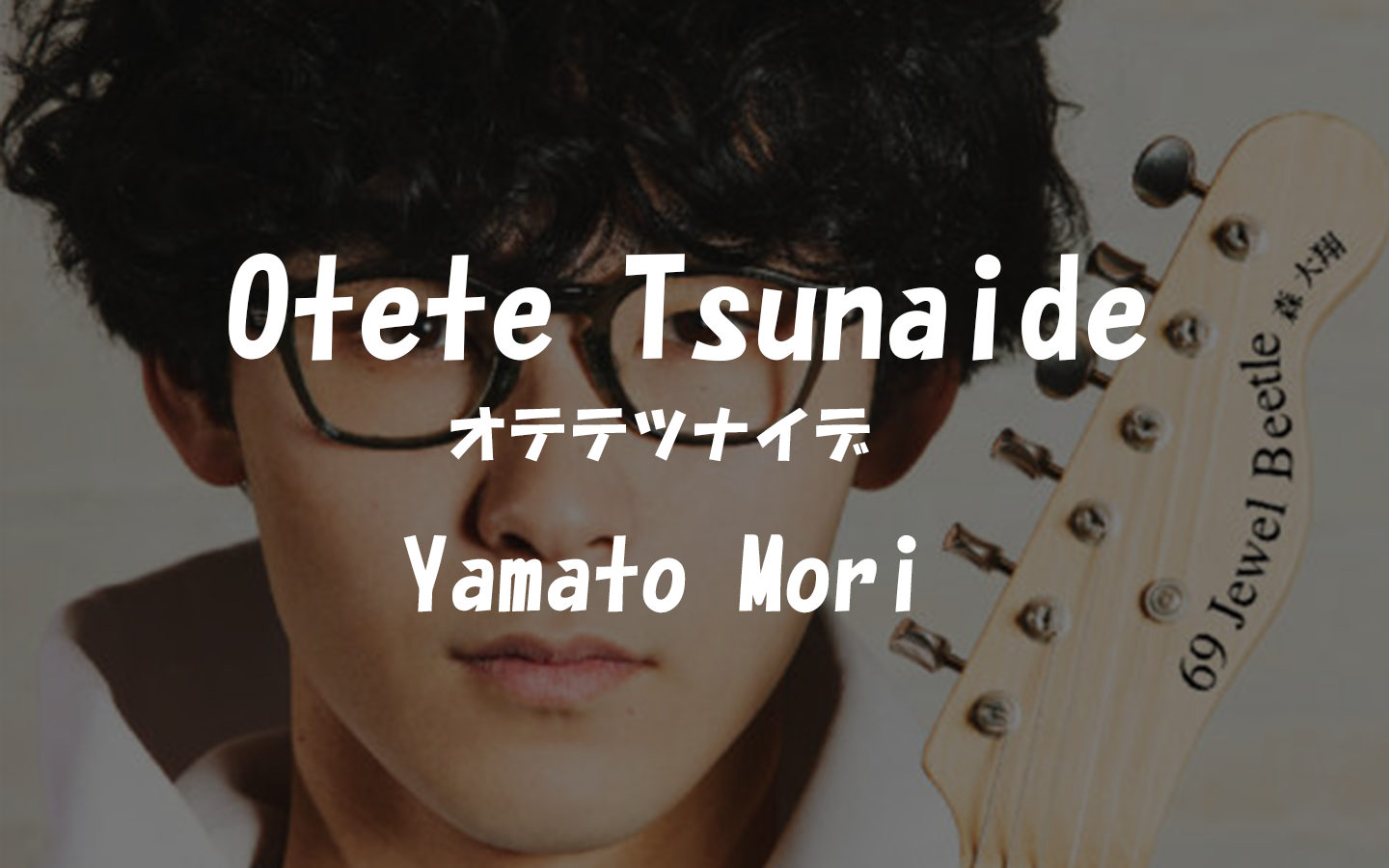
Released on April 28, 2023, Yamato Mori’s single Otete Tsunaide (オテテツナイデ) stands out in his discography as a rare work unbound by commercial tie-ins. While many of Mori’s songs—such as Tsuukaten (a campaign song for the Japanese Red Cross) or Gunjou Nikki (a TV drama insert track)—were written for specific purposes, Otete Tsunaide is pure expression.
In this article, we’ll dive into the lyrics meaning and analysis of Otete Tsunaide, showing how the song critiques modern digital society, blends blues with J-pop, and marks a turning point in Mori’s artistic journey.
Song Overview
- Title: オテテツナイデ (Otete Tsunaide / “Don’t Hold Hands”)
- Artist: Yamato Mori


- Release Date: April 28, 2023 (digital release)
- Songwriter: Yamato Mori
- Genre: Fusion of blues-rock and J-pop
- Theme: Loneliness, co-dependence, and the illusion of choice in the digital era
Lyrics Breakdown
Intro / Opening Lines
Japanese: “なんか”いい感じだね 都合いい様にエディットした世界は君のものさ
https://j-lyric.net/artist/a063164/l05ca87.html
Romaji: “Nanka” ii kanji da ne tsugou ii yō ni edditto shita sekai wa kimi no mono sa
English: “Feels kind of nice, doesn’t it? The edited world of convenience is all yours.”
The opening immediately targets digital algorithms and echo chambers. The “edited world” reflects feeds tailored for comfort—shiny, colorful, but ultimately shallow.
Verse 1 – Surfing the Flood of Information
Japanese: 欲しがらずとも勝手に提供されてくる 情報の波をサーフィン
https://j-lyric.net/artist/a063164/l05ca87.html
Romaji: Hoshigarazu tomo katte ni teikyō sarete kuru jōhō no nami o sāfin
English: Even without wanting it, information comes pouring in—you just surf the wave.
The lyric depicts passive consumption: endless scrolling, effortless entertainment, and the devaluation of empathy, as even others’ misfortune becomes consumable content.
Pre-Chorus – The Chains of Comfort
Japanese: お隣さん同士手を繋いで 安心という鎖に縛られてさ
https://j-lyric.net/artist/a063164/l05ca87.html
Romaji: Otonari-san dōshi te o tsunaide anshin to iu kusari ni shibararete sa
English: Neighbors holding hands, bound by the chain of so-called comfort.
On the surface, connection seems reassuring. But the metaphor reframes “holding hands” as a chain—a restriction that suppresses individuality under the guise of belonging.
Chorus – Dancing Until the End
Japanese: 踊ってボリュームを上げてさ ほら回って回して命果てるまで
https://j-lyric.net/artist/a063164/l05ca87.html
Romaji: Odotte boryūmu o agete sa hora mawatte mawashite inochi hateru made
English: Dance, turn up the volume, spin around and around—until life is gone.
The refrain captures the frenzy of consumerist cycles. Loud, endless, and numbing, the dance becomes a metaphor for thoughtless participation in societal routines.
Verse 2 – The Illusion of Choice
Japanese: 選んでいるつもりがね 選ばされてるだなんて想像もできないね
https://j-lyric.net/artist/a063164/l05ca87.html
Romaji: Erande iru tsumori ga ne erabasa reteru da nante sōzō mo dekinai ne
English: You think you’re choosing, but you can’t even imagine you’re being chosen.
This is the song’s sharpest critique. What feels like freedom of choice is actually guided by algorithms and conformity—a realization that echoes the song’s independence from commercial tie-ins.
Bridge – From Circles to Bubbles
Japanese: 今日も広がる狭い泡の中で 僕はどうしよう?
https://j-lyric.net/artist/a063164/l05ca87.html
Romaji: Kyō mo hirogaru semai awa no naka de boku wa dō shiyou?
English: Today again, inside this narrow bubble, what should I do?
The shift from “circle” to “bubble” is crucial. The circle suggests community, but the bubble suggests fragility. The protagonist begins to realize that the comfortable world is temporary, easily burst, and existentially unstable.
Themes & Interpretations
- Digital Co-Dependence: The “edited world” mirrors algorithm-driven feeds and curated comfort zones.
- Chains of Comfort: Surface-level unity conceals suppression of individuality.
- Illusion of Choice: Apparent freedom hides algorithmic and societal control.
- Bubbles of Fragility: Communities and trends are temporary, fragile, and destined to burst.
Connection to Artist’s Life / Previous Works
Unlike Mori’s tie-in songs (Tsuukaten, Gunjou Nikki), Otete Tsunaide rejects commercial alignment. Its independence mirrors its critique of “recommended happiness” and conformity. Musically, it is Mori’s first dive into blues—a genre historically tied to questioning oppression and existence. This artistic choice was not coincidence but necessity: the blues provided the perfect vessel for such themes.
Performance and Sound
The track was “constructed alone,” but its live performances expand it into full-band energy, with Mori on his PRS electric guitar alongside keyboards, bass, and drums. The blues riffs are partly instinctive “hand habits,” yet carefully crafted for impact. The contrast—improvised feel with calculated precision—gives the song both rawness and depth.
In live shows, the song becomes less critique and more catharsis: an escape from the “bubble” into real, visceral connection with the audience.
FAQ – Behind the Lyrics of Otete Tsunaide

What does “Otete Tsunaide” mean?

Literally “Don’t hold hands.” It critiques surface-level connections that function more as chains than true bonds.
Is this just a love song?
No. It is a critique of digital society, consumerism, and the illusion of choice, framed through blues rock.
Why did Mori choose blues for this track?
Blues traditionally voices oppression and existential struggle, making it the natural genre for expressing the song’s themes.
Conclusion
Otete Tsunaide is more than a single—it’s a manifesto. By rejecting commercial tie-ins and embracing blues, Yamato Mori confronts digital co-dependence, false comfort, and the fragility of curated happiness.
This track marks a turning point in Mori’s career: from guitarist to storyteller, from virtuosity to social critique. By asking “What should I do?” inside the fragile bubble, he compels listeners to confront their own answers.
👉 What about you—do you see Otete Tsunaide as a critique of society, a blues confession, or both? Share your thoughts below.


Comments