
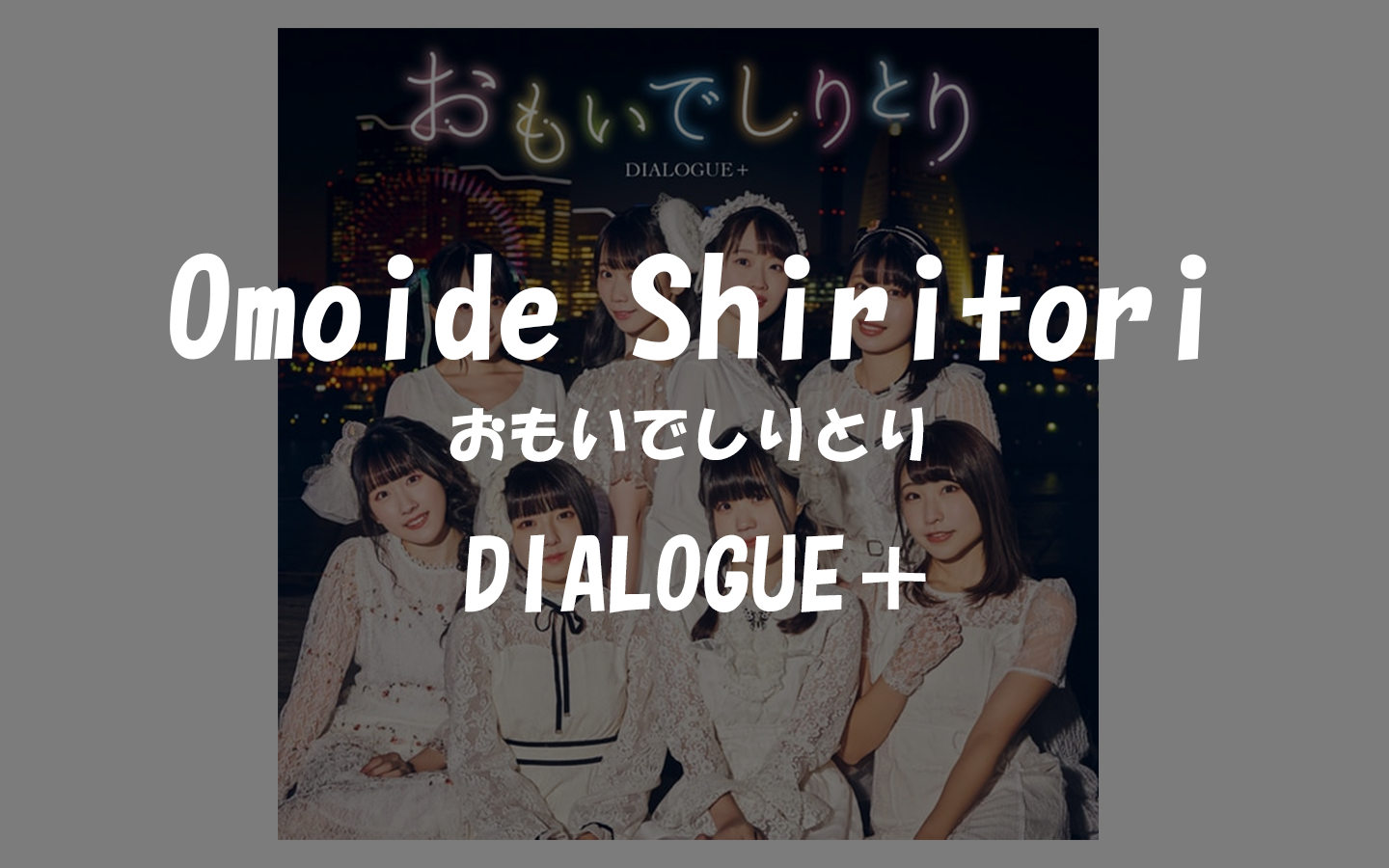
Released on May 19, 2021, Omoide Shiritori marked DIALOGUE+’s 4th single and became the opening theme for the anime Hige o Soru. Soshite Joshi Kōsei o Hirou (Higehiro: After Being Rejected, I Shaved and Took in a High School Runaway). Written and composed by Tomoya Tabuchi (UNISON SQUARE GARDEN) and arranged by Shuhei Mutsuki, the song transcends its role as a commercial tie-in. It blends lyrical depth, harmonic sophistication, and expressive vocals, emerging as one of DIALOGUE+’s most acclaimed works.
In this article, we’ll explore the lyrics meaning and analysis of Omoide Shiritori, unraveling its hidden wordplay, symbolic motifs, and emotional resonance with both the anime and the group’s identity.
Song Overview
- Title: おもいでしりとり (Omoide Shiritori – “Memory Shiritori” / “With Feelings, Shiritori”)
- Artist: DIALOGUE+


- Release Date: May 19, 2021
- Songwriters: Lyrics & Composition by Tomoya Tabuchi, Arrangement by Shuhei Mutsuki
- Tie-in: Opening theme for Higehiro anime
- Label: Pony Canyon
- Chart Performance: Oricon Weekly #6, Billboard Japan Hot Albums #7
- Theme: Balancing emotions, unraveling feelings into words, fragile human connection
Lyrics Breakdown
Intro / Opening Lines
Japanese: 星に願いを できるだけ愛を
https://j-lyric.net/artist/a0608b9/l054c9a.html
Romaji: Hoshi ni negai o dekiru dake ai o
English: A wish upon a star, as much love as possible.
The song begins with a universal motif—wishing upon a star—immediately grounding the lyrics in hope. But it’s not fairy-tale hope: it’s tinged with urgency, as if love must be grasped before it slips away.
Verse 1 – Everyday Fragility
Japanese: 今、季節はまるで天秤の様に / いつもの何気ないを選んだ帰り道
https://j-lyric.net/artist/a0608b9/l054c9a.html
Romaji: Ima, kisetsu wa marude tenbin no yō ni / Itsumo no nanigenai o eranda kaerimichi
English: Now, the seasons are like a scale / On the usual, casual path I chose homeward.
Here, life is depicted as a balancing act. Small daily choices carry disproportionate emotional weight, echoing the anime’s theme of a fragile, makeshift coexistence between the characters.
Pre-Chorus – Longing and Hesitation
Japanese: どうしよう、難しいや ring ring you.
https://j-lyric.net/artist/a0608b9/l054c9a.html
Romaji: Dōshiyou, muzukashii ya, ring ring you.
English: What should I do? It’s so hard—ring ring, you.
This line captures the protagonist’s hesitation. The playful “ring ring” softens the despair, showing how humor and vulnerability coexist in moments of uncertainty.
Chorus – The Word-Chain of Feelings
Japanese: おもいでしりとり「嬉しい」「いつもありがとね」…
https://j-lyric.net/artist/a0608b9/l054c9a.html
Romaji: Omoide shiritori “ureshii” “itsumo arigato ne”…
English: Memory shiritori: “happy,” “thank you as always”…
The chorus unveils the song’s most unique device: a hidden shiritori (Japanese word-chain game). Each quoted phrase links to the next, mirroring how feelings stumble awkwardly into words. The progression moves from gratitude (“thank you”) to desire (“I want to hold you”) to resolution (“let’s stay together”). This lyrical structure embodies the slow transformation of thought into dialogue, aligning perfectly with the group’s name, DIALOGUE+.
Verse 2 – The Unstable Scale
Japanese: あっちを立てりゃきっとこっちが立たない
https://j-lyric.net/artist/a0608b9/l054c9a.html
Romaji: Acchi o tate rya kitto kocchi ga tatanai
English: If you stand one side up, the other surely falls.
The recurring image of the “scale” (tenbin) represents the difficulty of maintaining balance in relationships. There’s no perfect solution—only fragile adjustments. This refusal to offer easy answers reflects Tabuchi’s lyrical philosophy of honesty over idealism.
Bridge – Naming the Light
Japanese: 生活が続いてって隙間でこぼれ落ちたこの光はなんだっけ / 名前を付けなくちゃどれがいいかな?
https://j-lyric.net/artist/a0608b9/l054c9a.html
Romaji: Seikatsu ga tsuzuitette sukima de koboreochita kono hikari wa nandakke / Namae o tsukenakucha dore ga ii kana?
English: Life goes on, but what is this light spilling through the cracks? / I need to name it, but what should I call it?
This section reveals the central struggle: how do you name fragile feelings before they disappear? It’s an acknowledgment of both the power and the insufficiency of language.
Climax / Final Chorus – From Hesitation to Declaration
Japanese: やっと言えるんだ「好きです。」
https://j-lyric.net/artist/a0608b9/l054c9a.html
Romaji: Yatto ierunda “suki desu.”
English: Finally, I can say it: “I love you.”
After circling through hesitation, balance, and wordplay, the protagonist finally speaks directly. The long-awaited confession lands with emotional weight, crystallizing the journey from inner turmoil to outward dialogue.
Outro / Closing Lines
Japanese: 届くかな 届けるんだ!
https://j-lyric.net/artist/a0608b9/l054c9a.html
Romaji: Todoku kana todokerunda!
English: Will it reach you? I’ll deliver it!
The final cry is no longer hesitant—it’s a vow. More than a character’s resolution, it’s DIALOGUE+ declaring their mission: to deliver feelings through music.
Themes & Interpretations
- Double Meaning of the Title: Omoide (“memories”) and omoi de (“with feelings”) show the dual journey from nostalgia to present dialogue.
- Shiritori as Emotional Progression: The hidden word-chain structure mirrors the halting, awkward flow of human communication.
- Balance and Fragility: The scale motif symbolizes the constant adjustments of relationships, without perfect equilibrium.
- From Inner Voice to Outer Words: The song dramatizes the struggle of turning feelings into language—culminating in “I love you.”
Connection to Artist’s Life / Previous Works
Tomoya Tabuchi’s songwriting often rejects simplistic “love conquers all” messages. Instead, he embraces cynicism and struggle, building trust with listeners through emotional honesty. In Omoide Shiritori, this ethos is evident in the refusal to offer a neat resolution—the balance is fragile, the words halting, but the truth undeniable.
Connection to Anime and Performance
As the opening for Higehiro, the song amplifies the anime’s story of two characters negotiating trust and vulnerability. In live performance, the division of lines among DIALOGUE+ members reflects this fragility: each voice carries a fragment of the story, only uniting in the climactic chorus. The final shout, “Todokerunda!”, becomes not just a lyric but a manifesto.
FAQ – Behind the Lyrics of Omoide Shiritori

What does “Omoide Shiritori” mean?

It has a double meaning: “Memory Shiritori” and “With Feelings, Shiritori.” The title plays on word chains as a metaphor for communication.
Is the shiritori structure intentional?
Yes. The quoted phrases in the lyrics form a continuous word-chain, mirroring the awkward but honest flow of human feelings.
Why does the song keep referencing a scale?
The “tenbin” (scale) symbolizes fragile balance—between past and present, self and other, fear and connection.
Conclusion
DIALOGUE+’s Omoide Shiritori is a masterclass in how lyrics, composition, and performance intertwine to tell a story. More than a theme song, it’s an anthem of fragile communication, wordplay, and emotional honesty. By weaving memories and feelings into a never-ending shiritori, the track redefines what it means to turn emotion into dialogue.
👉 What about you—do you read Omoide Shiritori as a love song, a story of fragile balance, or both? Share your thoughts below.

Comments